AI Won’t Save You From a Bad Culture Hire
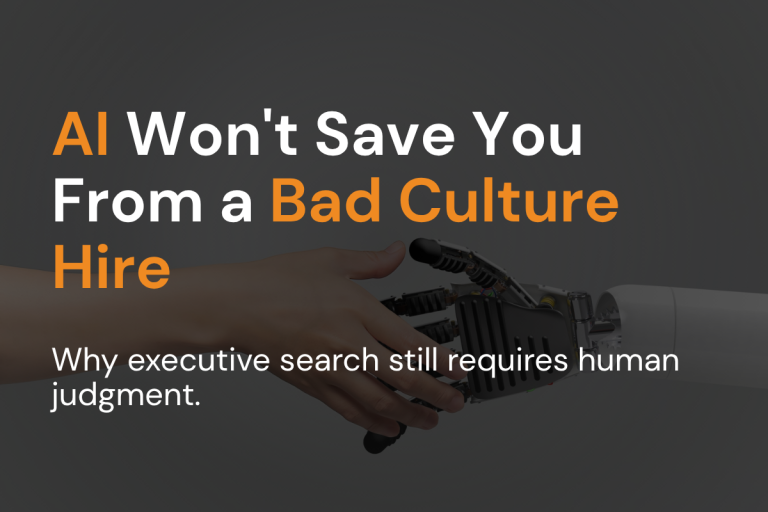
AI has already changed recruiting. It finds candidates faster, scans backgrounds at scale, and moves hiring teams through early-stage screening more efficiently than ever. Good firms should be using it, and we do. It handles the admin work that used to eat hours, which means I spend more time on the part that actually matters: getting to know the people.
But in executive search, speed is not the hardest part. Judgment is. Getting a real read on a candidate means building enough trust that they tell you what’s actually on their career wish list, what’s driving the job search, and what they need from their next role. That takes time and multiple conversations that don’t feel transactional. Only then can you tell whether the fit is real.
At the leadership level, the question is rarely whether someone can do the job. It’s whether they should be trusted to do it in your environment. Your team, your board, your culture, your stage of growth.
AI can identify patterns and compare resumes. It can’t read nuance, context, or character. It can’t hear subtle arrogance or disguised blame-shifting. It can’t tell the difference between someone who performs well in interviews and someone who will lead well in your organization. We see this constantly. The best interviewer is not always the right hire.
Search professionals sometimes joke about having an internal “jerk detector.” What they really mean is the ability to spot behavior that looks polished on paper but causes real damage inside organizations. No algorithm flags the candidate who charms the CEO in the final round and has quietly burned every team they’ve led. We’ve seen it. It’s not rare.
It goes both ways. Candidates are now using AI to tailor resumes to job descriptions and write convincing cover letters. Both sides are gaming the system, which means you need someone in the middle who can cut through and figure out what’s real.
This shows up in small but telling ways: how candidates talk about former colleagues, whether they take accountability, the reasons they give for leaving previous roles, how they treat the people around them, how they handle hard conversations, how they communicate with us across a multi-step process.

The best executive search partners aren’t just sourcing candidates. They’re filtering risk. They help clients define what success actually looks like, ask the right questions upfront, and lock in alignment before the search begins. We start talking compensation at the first meeting and keep that conversation going with both sides all the way through. By the time an offer is made, there are no surprises.
Here’s something worth saying out loud: candidates aren’t just evaluating the role. They’re evaluating whether they trust you enough to tell you the truth about what they actually need. That conversation doesn’t happen with a chatbot.
This isn’t an argument against AI. The best firms use it every day. But they use it as a tool, not as a replacement for judgment.

If you’re hiring at the leadership level and want a partner who filters for fit before the search starts, let’s talk.
About the Author
Sarah Gobble is a Managing Director at Fahrenheit Advisors, where she leads executive search engagements with a strategic, relationship-focused approach. Based in Richmond, Virginia, she partners with clients nationwide, bringing a broad perspective and deep expertise across sectors such as finance, operations, sales, manufacturing, and construction. Sarah is especially known for her work with nonprofit organizations and government entities, where her ability to understand mission, culture, and leadership needs results in successful, long-term placements. Her clients value her consultative style and her ability to align hiring strategies with organizational goals.