Intervention Without Diagnosis Is Malpractice

Why the smartest move isn’t always the fastest one
Imagine walking into a doctor’s office with a persistent stomach ache. Without an exam, without bloodwork, without a medical history, the doctor tells you he needs to cut you open to figure out what’s wrong. You’d be alarmed—and rightly so. No competent physician would leap to surgery without a diagnosis.
The same principle applies to organizational change. Yet every day, executives, consultants, and operating partners leap into action—prescribing solutions and running the playbook—without fully understanding the problem they’re solving. The intention is usually good: lean in, go fast, be decisive, get results. But acting without diagnosing is managerial malpractice. In business, as in medicine, intervention without diagnosis isn’t just irresponsible. It can be dangerous.
the pressure to act
Operations leaders—particularly in the private equity space—face constant pressure to deliver quick wins and show progress against the investment thesis. That pressure creates an environment where swift action is praised and deliberation looks like hesitation. Or worse, weakness.
Consider the home services industry. A PE-backed platform acquires a company where frontline technicians handle the full cycle: diagnosis, sales, and repair. The acquiring company’s playbook separates those functions—technicians diagnose and fix the easy stuff, then hand off leads to specialist salespeople for high-dollar installations. The data supports it: lead-generating techs tend to produce higher maintenance tickets and better install close rates. The technical solution is clear.
But the adaptive problem—frontline employees being asked to fundamentally change how they see their role—is far more daunting. When the playbook army marches forward without diagnosing that adaptive challenge, they deepen the J-curve of change: the erosion in performance lasts longer and cuts deeper than it needed to.
diagnosis is not delay
One of the misconceptions that prevents proper diagnosis is a false binary between action and analysis. Leaders fear getting stuck in the weeds—too much data, too many opinions, not enough movement. But diagnosing isn’t about stalling. It’s about ensuring that when you do act, your actions are pointed in the right direction.
Edgar Schein, widely regarded as the father of organizational development, drew a critical distinction between two modes of helping: “doing to” and “doing with.” Diagnosis is a “doing with” process. It invites the system to reflect on itself. When done well, it is collaborative, transparent, and revealing—and it leads to far greater ownership of the results.
Effective diagnosis examines at least three levels: the individual (capabilities, motivations, and limitations), the group (how decisions get made, how conflict is handled, how work actually flows
between people), and the organization (the gap between espoused values and actual behavior, what leaders reward, how the culture responds to stress). Without examining all three, you risk solving the wrong problem at the wrong level—or creating new ones.
why leaders skip it
If diagnosis is so essential, why do leaders routinely short-circuit it? Three reasons. First, bias for action: many leaders are wired to fix, and deal teams push for urgency. Diagnosing feels like delay. Second, overconfidence: past experience and trusted playbooks create a false sense of certainty. What worked in one context may fail in another. Third, fear of what diagnosis reveals: a proper diagnosis can surface uncomfortable truths about leadership gaps, cultural dysfunction, or broken systems. It’s easier—emotionally and politically—to stay in solution mode.
pace, not speed
Speed is not the enemy. But speed without insight is folly. The better frame for what organizations actually need is pace: the discipline to know when to accelerate, when to slow down, when to question, and when to commit. Good leadership balances the demands of the urgent and the important while accounting for the influence of every key stakeholder.
Diagnosis isn’t the opposite of decisive action. It’s the prerequisite for it.
At Fahrenheit Advisors, we bring experienced operators to the table who believe in diagnosing the problem before prescribing the solution. If you’re navigating organizational change—especially under the pressure of a PE timeline—Let’s Talk.
About the Author
scott cook
Managing Director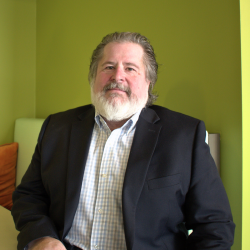
Scott Cook partners with organizations to deliver transformative human resources strategies and operational excellence, leveraging over 30 years of leadership experience in private equity, public, and privately held companies. His expertise lies in building high-performing HR functions, leading complex M&A integrations, and fostering winning workplace cultures to drive business growth. Over his career, Scott has successfully led HR due diligence and integration for more than 100 acquisitions, ranging in size from $2M to $500M, navigating cross-border complexities in North America, Latin America, and Europe. He has established HR centers of excellence, implemented advanced talent acquisition and management systems, and restructured benefits programs—achieving significant cost savings and improved employee engagement. His work includes driving strategic initiatives that align talent development with business objectives, reducing turnover, and building scalable recruiting engines capable of hiring over 1,800 frontline workers annually.
Connect with Scott Cook on LinkedIn.